

Kitchen Cabinet Refinishing in Phoenix
What Homeowners Should Know Before Updating Their Cabinets
If your kitchen cabinets look worn, dated, or faded, you may be searching for kitchen cabinet refinishing in Phoenix as a way to refresh your kitchen without replacing everything. Cabinet refinishing is one of several options homeowners explore when updating their kitchen cabinets. However, it’s important to understand what refinishing actually involves and how it compare to other cabinet resurfacing options available today.
In many cases, homeowners who begin by researching refinishing ultimately discover that cabinet refacing offers far greater design flexibility and durability while still avoiding the cost and disruption of a full kitchen remodel. Below is a helpful overview of what cabinet refinishing is, when it can work well, and how it compares to cabinet refacing.
What is Cabinet Refinishing?
Kitchen cabinet refinishing is a process that updates the appearance of existing cabinets by lightly sanding and applying a new stain or paint finish to the existing cabinet doors and drawer fronts, and cabinet boxes.
The goal of refinishing is to refresh the appearance of cabinets while keeping the original cabinet doors, drawer fronts, and cabinet boxes. Typical cabinet refinishing may include:
- Removing cabinet doors and drawer fronts
- Lightly sanding or “scuff sanding” the existing finish
- Repairing minor surface imperfections
- Applying a new stain or paint finish over the existing finish
- Reinstalling the doors and hardware
In most refinishing projects, the cabinets are not sanded down to bare wood. Instead, the existing finish is lightly sanded to create a rough surface so that new finish can adhere to it. This means the new finish is essentially bonding to the previous finish rather than to raw wood. Because of this, the bond between the old finish and the new finish is primarily mechanical rather than chemical, which affects how well the finish holds up over time.
Because the cabinet boxes remain permanently installed in the kitchen, the cabinet frames and exposed surfaces must typically be sanded and refinished inside the home, which can involve sanding dust and finishing odors during the process.
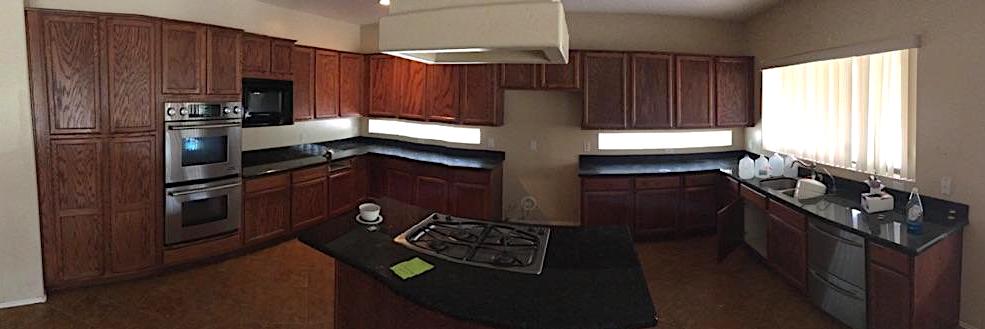
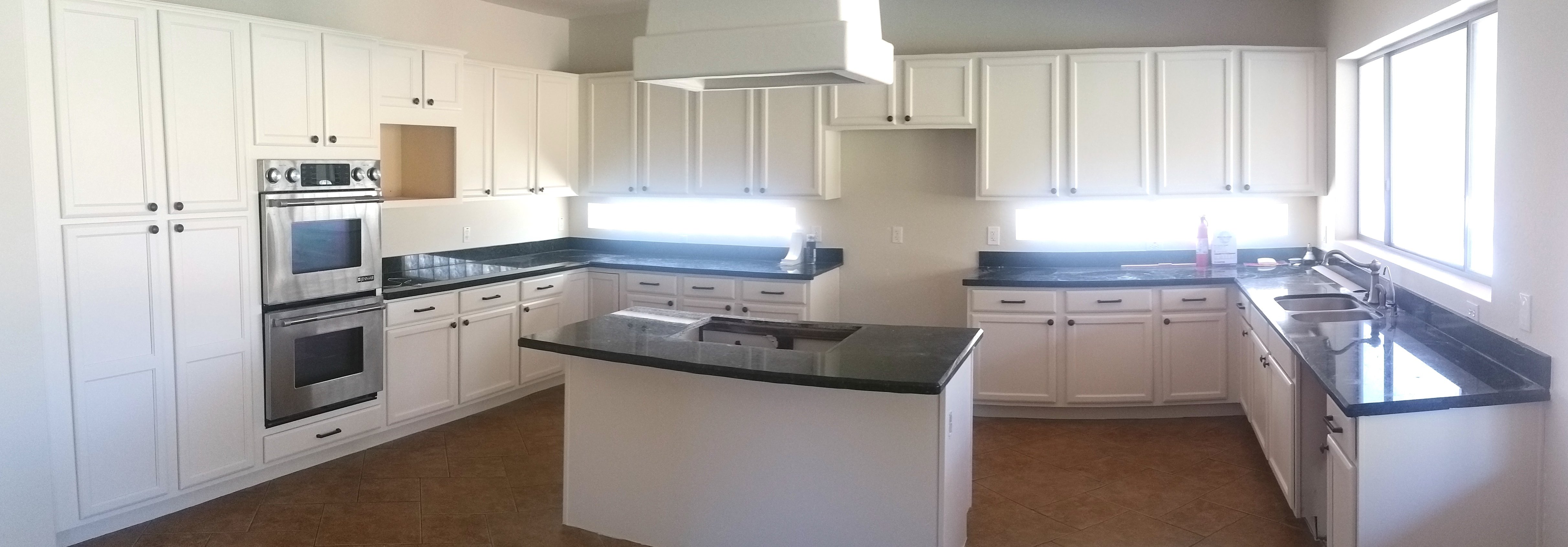
Refinishing can change the color or sheen of cabinets, but it does not change the cabinet style or structure. For example, if your cabinets have a traditional raised-panel door style, refinishing will keep that same door style, just with a different finish.
When Cabinet Refinishing Can Make Sense
For some kitchens, refinishing may be a reasonable option. Refinishing is most commonly considered when:
- Cabinets are solid wood and structurally sound
- The homeowner likes the existing cabinet door style
- The goal is simply to change the color or stain
- The kitchen layout will remain exactly the same
For example, if someone has oak cabinets with a natural finish and simply wants them stained darker, refinishing could potentially accomplish that.
However, refinishing has several limitations that many homeowners do not initially realize.
Limitations of Cabinet Refinishing
While refinishing can refresh cabinet color, it does not significantly change the overall look of a kitchen. Some of the most common limitations include:
Work is Performed Inside the Kitchen
Because cabinet boxes are fixed in place, much of the sanding and finishing work during refinishing is performed directly inside the kitchen. This can sometimes mean dust from sanding and the temporary smell of paints or finishes while the work is being completed.
Limited Design Changes
Refinishing keeps the same cabinet doors, meaning the style, panel design, and proportions remain exactly the same. If the doors look dated, refinishing will not solve that issue.
Wear and Damage May Still Show
Over time, cabinets often develop dents, chips, word edges, and uneven surfaces. Even after refinishing, some of these imperfections can remain visible.
Durability of Painted Finishes
Painted cabinets created through refinishing are more susceptible to chipping or wear because the new finish is typically applied over the existing finish after light sanding, creating a mechanical bond between the old and new finish, rather than bonding directly to bare wood.
Older Cabinets Still Look Like Older Cabinets
Even with a new finish, refinished cabinets often retain the appearance of the original cabinetry rather than creating the feel of a newly updated kitchen.
Because of these limitations, many homeowners exploring refinishing begin looking for an option that allows for a bigger transformation without the cost of replacing all the cabinets.


Cabinet Refinishing vs Cabinet Refacing
One of the most common questions homeowners ask is how cabinet refinishing compares to cabinet refacing. While both options reuse the existing cabinet boxes, the results are quite different.
| Feature | Cabinet Refinishing | Cabinet Refacing |
|---|---|---|
| Cabinet Doors | Existing doors reused | Brand-new doors installed |
| Cabinet Style | Cannot change door style | Completely new styles available |
| Cabinet Boxes | Sanded and refinished in place | Covered with matching real-wood panels |
| Finish Type | Paint or stain applied over existing finish after scuff sanding | Factory-finished doors and wood panels |
| Durability | Finishes can wear or chip sooner | Long-lasting professional finishes |
| Design Options | Limited to color changes | Hundreds of door styles, colors, and wood species |
| Customization | Minimal | Can add trim, hardware, soft-close hinges, custom new build option, and other upgrades |
| Mess / Disruption | Sanding dust and finishing fumes in the kitchen | No sanding or finishing work inside the home |
| Overall Result | Cabinets look refreshed | Kitchen looks dramatically updated |
Cabinet refacing replaces the doors, drawer fronts, and visible cabinet surfaces while keeping the existing cabinet boxes in place. New doors are installed, and the cabinet frames are covered with real wood panels to match. The result is a kitchen that looks dramatically different while avoiding the expense and demotion of a full cabinet replacement.

Why Many Phoenix Homeowners Choose Cabinet Refacing Instead
Today, many homeowners exploring cabinet refinishing discover that cabinet refacing offers far more flexibility and long-term value. Cabinet refacing allows you to:
- Update outdated cabinet door styles with a wide range of modern or traditional door designs
- Select painted or stained finishes with professional durability
- Update cabinet hardware and soft-close hinges
- Create a kitchen that looks significantly newer and more updated
Because refacing replaces the most visible parts of the cabinetry rather than simply refinishing them, the final result often looks much closer to a brand-new kitchen than what refinishing along can achieve. For homeowners researching kitchen cabinet refinishing in Phoenix, refacing is often the option that delivers the biggest visual improvement while still making use of the existing cabinet boxes.

Is Cabinet Refinishing or Refacing Right for Your Kitchen?
Every kitchen is different, and the right solution depends on your goals for the space.
Refinishing may be work considering if:
- You like your current cabinet door style
- You only want to change the color or stain
- Your cabinets are in excellent condition
- You’re looking for a short-term solution
Cabinet refacing is often the better option when:
- You want to update the cabinet style
- You want your kitchen to look newer and more modern
- You want a more durable, long-lasting finish
- You want to avoid the cost of replacing all the cabinets
Many homeowners who initially search for cabinet refinishing in Phoenix ultimately choose cabinet refacing once they see how much more dramatically it can update the look and longevity of their kitchen.
Explore Cabinet Refacing for Your Kitchen
If you’re considering ways to update your kitchen cabinets in Phoenix, Scottsdale, Gilbert, Chandler, or surrounding areas, cabinet refacing may provide the transformation you’re look for. Refacing allows homeowners to refresh their kitchen’s style while keeping the existing cabinet layout, making it one of the most efficient ways to upgrade a kitchen without a full remodel.
To learn more about this option, explore our page on cabinet refacing or contact us to discuss the possibilities for your kitchen.
Cabinet Refinishing FAQs
What is the difference between cabinet refinishing and cabinet refacing?
Cabinet refinishing updates the appearance of existing cabinets by lightly sanding the current finish and applying a new stain or paint over it. Because the original factory finish is not removed completely, the new finish adheres to the old finish through a mechanical bond. Cabinet refacing, on the other hand, replaces the cabinet doors and drawer fronts with brand-new ones and covers the visible cabinet surfaces with matching wood panels. These new components come with factory-applied finishes designed for long-term durability.
In simple terms, refinishing updates the existing cabinets, while refacing replaces the most visible parts of the cabinetry to create a more significant and longer-lasting transformation.
Is cabinet refacing better than refinishing?
That depends on your goals for the kitchen. If you like your current cabinet door style and only want a different color, refinishing may be worth considering. However, it is is not as durable over the long term due to how the new finish is applied over the old finish. If you want to update the style of your cabinets, improve durability, and achieve a more dramatic transformation, cabinet refacing is often the better option.
Can cabinet refinishing change the style of my cabinets?
No. Cabinet refinishing keeps your existing cabinet doors and drawer fronts, so the style stays the same. It can change the color or sheen of the cabinets, but it does not give you a new door profile or a more updated cabinet design.
Is cabinet refinishing messy?
It can be. Because cabinet boxes remain installed in the kitchen, the cabinet frames and exposed surfaces are typically sanded and refinished inside the home. That can mean sanding dust and the smell of stains, paints, or finishing products in the kitchen during the project.
Is cabinet refacing less messy than refinishing?
In many cases, yes. Cabinet refacing uses new doors, new drawer fronts, and matching wood panels for the visible cabinet surfaces, so there is generally little to no sanding and finishing work that needs to be done inside the kitchen compared to refinishing.
How long does cabinet refacing and cabinet refinishing last?
Cabinet refinishing can improve the appearance of cabinets, but it typically lasts about 2-8 years because the new finish is applied over the existing finish after light sanding. Cabinet refacing installs brand-new doors, drawer fronts, and wood panels with factory-applied finishes and can last 20 years or more.
Is it cheaper to refinish or reface kitchen cabinets?
Cabinet refinishing is often less expensive upfront because it keep the existing doors and drawer fronts. However, cabinet refacing offers much more in terms of style change, visual impact, and long-term value. For many homeowners, the better question is not just which option costs less, but which option delivers the result they actually want.
What if I want my kitchen cabinets to look completely different?
If you want a different cabinet style, a more updated look, or a bigger transformation overall, cabinet refacing is usually the better fit. Refinishing can refresh the existing cabinets, but refacing give you the opportunity to change the visible design of the kitchen.
Is painting cabinets the same as refinishing?
Yes, painting cabinets is considered a type of refinishing. It involves lightly sanding the existing finish and applying paint over it.
Why doesn’t cabinet refinishing last long?
Cabinet refinishing typically involves lightly sanding the existing finish and applying a new finish on top of it. Because the new finish bonds to the old finish rather than directly to bare wood, it chips and wears sooner over time.
Other Cabinet Refinishing Options Homeowners Ask About
Homeowners researching cabinet refinishing in Phoenix often come across related terms like cabinet painting, kitchen cabinet resurfacing, or the cost of refinishing cabinets. These options typically involve applying a new finish over the existing cabinet surfaces after light sanding. While this can change the color of the cabinets, it does not replace the cabinet doors or change the cabinet style. Because the new finish is applied over the existing finish rather than directly to bare wood, the durability can vary. For homeowners looking for a longer-lasting update and the ability to change cabinet styles, cabinet refacing is often the preferred option.